

LOST IN TRANSLATING THE DIVINE MESSAGE
Different Perspectives of Indonesian Muslim Feminists
on Polygamy Verses in the Qur’an
Yulianti Muthmainnah | Institute Technology and Business Ahmad Dahlan, Jakarta – Indonesia
Ilham Mundzir | Universitas Muhammadiyah Prof. Dr. Hamka, Jakarta – Indonesia
Yusron Razak | UIN Syarif Hidayatullah, Jakarta – Indonesia
Nasr Muhammad Arif I Cairo University – Egypt
Corresponding author: ymuthmainnah@gmail.com
Abstract: The Indonesian government, through the Ministry of Religion, has officially translated the Qur’an to understand the content and context of the Qur’an. This translation became the only official translation for many years and serves as a public reference. However, such translation is not always well-received; some agree with it by offering notes, while some disagree and suggest new translations because they are considered biased, including gender bias. One of the verses that reflects gender bias is the translation of the Qur’an al-Nisa [4]:3 regarding polygamy. This paper analyzes the translation of the Qur’an by comparing the opinions of two Indonesian scholars, namely Siti Musdah Mulia and Faqihuddin Abdul Kodir. This research employs a qualitative methodology, focusing on literature study, interviews, and lecture observations conducted by the two scholars. This paper concludes that Kodir disagreed with the government’s translation and offered a new translation regarding the verse on polygamy, while Mulia gave a different interpretation and approach to understanding the text.
Keywords: Polygamy, gender bias, new interpretation, translation of the Qur’an.
Introduction
All marriage practices where the husband has more than one wife in Indonesia are referred to as polygamy. Opposition to polygamy has existed since the time of Raden Ajeng Kartini, (d. 1904), a pre-
independence Indonesian heroine in women’s rights, as illustrated in her letter dated November 29, 1901.1 Additionally, the First Indonesian Women’s Congress in 1928 also rejected polygamy,2 which was later reinforcedin 1930, when the Federation of Indonesian Women’s Associations demanded a ban on polygamy. The same reaction occurred in 1954, when polygamy was again opposed after President Soekarno married Hartini as his second wife in a polygamous marriage.
Until now, polygamy continues to be practiced, and even embraced,3 while it begins to wane in other contexts.4 In 2020, when the number of marriage was 11.780.346,5 there were 1.003 polygamy application in religious courts.6 However, the unregistered polygamy is said to be much higher.7 Within Indonesian society, certain groups are likely to practice polygamy than others.8 Puspo Wardoyo, the owner of a restaurant chain called ‘Wong Solo’, not only has four wives, but also openly campaigns for the support of polygamy through various means.9 In 2003, Wardoyo organized a public celebration where he presented a “Polygamy Award.”10 The event was met with opposition and criticism as it undermines the struggles of women activists who have fought to abolish the polygamy provision in the 1974 Marriage Law.11 Following the event and the rise of conservatism in Indonesia, polygamy is no longer considered a taboo subject to speak about and has even received a large-scale campaign,12 including webinar classes on polygamy, social media campaigns promoting polygamy,13 endorsements from several political candidates during regional elections,14 as well as the drafting of bylaws in support of polygamy.15 Moreover, people have naturalized polygamy as part of the “new normal,”16 despite the harm it causes women and families.17
It is undeniable that proponents of polygamy justify their actions through religious perspectives. Such perspective is grounded in the Qur’an and reinforced by the 200218 official translation of the Ministry of Religious Affairs of the Republic of Indonesia (MORA) on polygamy (Qur’an al-Nisa [4]:3), which states:
‘And if you are worried that you will not be able to do justice to the (rights of) orphaned women (if you marry her), then marry (other) women that you like: two, three, or four. But if you are worried that you will not be able to do justice, then (marry) only one, or the female slaves you have. Such is closer so that you do no wrong (dzalim).’
In the above translation, explanatory notes are provided for the phrases “justice,” “only marry one person,” and “the female slaves you have.” The phrase “to be just” is defined as “fair treatment in meeting the needs of wives, such as clothing, shelter, taking turns, and other aspects concerning body and soul.” The exegesis of “marrying only one person” explains that “Islam permits polygamy only under certain conditions. It is important to note that before the revelation of this verse, polygamy already existed and was practiced by king, societies, prophets before Prophet Muhammad. This verse, in fact, limits polygamy to four wives.” However, the term “slaves” is clarified as referring to “slaves and slavery, which no longer exist.”
By comparison, the translation issued by the Indonesian Department of Religious Affairs in 1971 states:
“And if you fear that you will not be able to do justice to (the rights of) orphaned women (if you marry them), then marry (other) women that you like: two, three, or four. Then if you are afraid that you will not do justice, then (marry) only one, or the slaves you have. That is closer to doing no wrong (dzalim).”
Unlike the 2002 translation, the 1971 version provides explanations only for the terms “just” and “then (marry) only one person,” while the meaning of “slaves” is left unaddressed. Apart from the absence of commentary on this phrase, the remainder of the translation appears largely similar. A further comparison reveals that the most recent translation issued by MORA and published by Cordoba under the title “The Qur’an for Women” in 2012, presents a similar translation, which writes:
‘And if you fear that you will not be able to do justice to the (rights of) orphaned women (if you marry her), then marry (another) women whom you like: two, three, or four. But if you are worried that you will not be able to do justice, then (marry).
only one or the female slaves you have. The latter is closer so that you do no wrong (dzalim).
Cordoba’s 2012 translation is identical to that of MORA in 2002, including its accompanying exegesis. In other words, the 2012 and 2002 editions are identical, and both differ from the 1971 translation, which does not explain the term “slave.” Based on the three translations above, MORA has tried to explain the word ‘just’, the history of polygamy before the Prophet Muhammad, emphasize that certain conditions must be met, and limit the number of wives. In addition, they also suggest that slaves no longer exist.
Indonesian clerics have offered various interpretations of Qur’an al-Nisa [4]:3. Among them is Quraish Shihab, who described the permission for polygamy as an “emergency door.”19 Previously, Abdul Malik Karim Amrullah, better known as Buya Hamka, interpreted Qur’an al-Nisa [4]:3 as a continuation of the previous verse, which commands the care of orphans. If a guardian is interested in marrying a female orphan, he is obliged to fulfill her rights as a wife. It is evident that in the hands of different ulema and preachers, this verse can be interpreted in diverse ways. For instance, Ustadz Arifin Ilham, a polygamist with three wives, highlights the importance of “preparing knowledge about polygamy, understanding the law of polygamy, and understanding its implementation.”20 However, other preachers tend to emphasize the supposed benefits to married women as an effort to encourage polygamy. To illustrate, Ustadz Das’ad Latief often jokingly promotes polygamy to his female audience as a shortcut to heaven.21
In summary, polygamy remains an interesting discussion since it correlates with religious perception and the positions taken by religious authorities (ulema). This article examines the dynamic responses of two Indonesian scholars, Siti Musdah Mulia and Faqihuddin Abdul Kodir, to the discourse on polygamy as reflected in three official Qur’an translation series published by the Ministry of Religious Affairs (MORA). Both are regarded as progressive and reformist figures, yet they offer distinct perspectives on the translation of Qur’an al-Nisa
[4]:3 in contrast to MORA and other scholars.
Introducing Siti Musdah Mulia and Faqihuddin Abdul Kodir
Siti Musdah Mulia is a female ulema, intellectual, feminist, and human rights activist. She became the first woman to earn a doctorate in Islamic political thought from UIN Syarif Hidayatullah Jakarta (1997) and the first woman to receive the title of Research Professor of Religious Lectures at the Department of Religion from the Indonesian Institute of Sciences (LIPI) in 1999. As a feminist, she writes extensively on women’s rights and feminism-driven family law. When she served as expert staff to the Minister of Religion of the Republic of Indonesia (2003–2007), she led a team that drafted a liberal Counter Legal Draft to the Compilation of Islamic Law (CLD-KHI).22 The CLD-KHI sparked fierce debate due to its feminist stance, including the prohibition of polygamy. It therefore rules that polygamy is haram lighairihi (prohibited for external reasons) and may constitute a criminal act. Consequently, Mulia has been the target of criticism and smear campaigns by traditionalist and conservative groups; some even declared that “her blood is halal.” In her works, Mulia discusses not only Qur’anic studies but also issues of politics, sexuality, and religious minorities. Her strengths also include wide connections, thorough knowledge of national laws and international conferences on women’s issues, and experience in both national and international women’s movements. In addition, she has supervised many postgraduate students, most of whom focus on women’s issues, allowing her to remain updated.23
Another leading feminist figure is Faqihuddin Abdul Kodir,24 who completed his education in traditionalist Islamic boarding schools, a bachelor’s program in Egypt, a master’s degree in Malaysia, and a doctoral program in Indonesia. He is an academic at the State Islamic University Syekh Nurjati Cirebon as well as an Islamic feminism activist. His method is non-confrontational and promotes a hermeneutic tool called Mubadalah (reciprocity) between men and women, which he developed when he oversaw the hadith rubric in Swara Rahima magazine, published by Rahima, a civil society organization focusing on women’s issues. Kodir advances his idea of Islamic feminism through two main procedures: eclectically selecting hadiths that support equality and justice for women, and providing alternative understandings of those with potential bias. He does not directly reject hadiths that appear misogynistic. Instead, he demonstrates that hadith remains necessary in discussions of gender issues,25 as supported by other findings.26 Being a man himself, Kodir also encourages men to be actively involved in efforts to eliminate gender injustice. In 2020, Kodir was assigned to a project under the Ministry of Religious Affairs of the Republic of Indonesia (MORA or Kemenag RI) aimed at promoting justice and equality in household relations. The project, titled Keluarga Maslahah (Happy Family), draws on the concept of reciprocity between men and women, which he elaborates in his widely distributed book Qira’ah Mubadalah.
Concerning polygamy, Mulia takes a firm stance, criticizing the practice and even calling for its prohibition due to the violence experienced by women. Taking a different approach, Kodir discourages polygamy by arguing that monogamy is sunnah. Kodir explicitly stated that the Qur’anic translation issued by MORA was gender-biased because it positioned women as objects. He then offered a translation that was more humane toward women. This paper examines Kodir’s works, namely Qira’ah Mubadalah (2019), Sunnah Monogami: Mengaji Al Qur’an dan Hadits (2017), and 60 Hadis Hak-hak Perempuan dalam Islam: Teks dan Interpretasi (2017). In addition, interviews and speeches delivered during webinars are used as
supporting sources. Their other writings, published in various books, are treated as secondary sources in this paper.
Siti Musdah Mulia and the Reconstruction of Polygamy Verses in the Qur’an
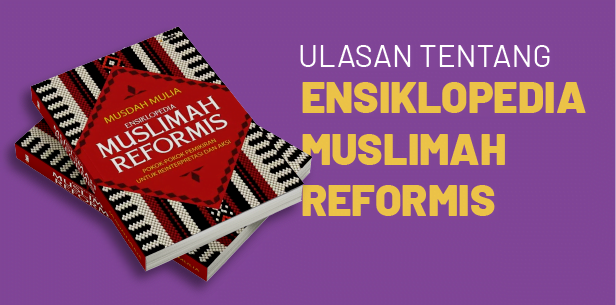
Mulia’s thoughts on polygamy are well documented in her many books, namely Ensiklopedia Muslimah Reformis: Pokok-pokok Pemikiran untuk Reinterpretasi dan Aksi (2019), Islam Menggugat Poligami (2004), Pandangan Islam Tentang Poligami (1999), and Meretas Jalan Awal Hidup Manusia: Modul Pelatihan Konselor Hak-Hak Reproduksi (2002). Before discussing the translation of Qur’an al-Nisa [4]:3, Mulia emphasizes the value of monotheism (tawhid), which places Allah as the only entity to whom everyone must submit; no other can be regarded as higher. Consequently, women and men are considered equal, with a person’s status determined by their level of piety and faith in Allah. Mulia then critiques the lack of equality and justice in society, where women and men are distinguished primarily on the basis of biology. The situation creates the potential for discriminatory actions against women. Therefore, there is an urgent need for a new interpretation.27 Mulia also analyzes pre-Islamic forms and practices of marriage (now abolished) and compares them with the principles of marriage in Islam. She further points out that polygamy existed long before Islam and is not exclusive to Muslims, as it has been practiced by almost all human civilizations. This historical perspective emphasizes that Islam did not introduce polygamy. Mulia argues that Islam limits the number of wives to four, which was a radical shift for men at the time. Moreover, Islam imposes stricter conditions on those who wish to practice polygamy, requiring them to uphold justice. This was a significant development, especially compared to the pre-Islamic era, when polygamy was practiced without restrictions—often leaving women in misery and suffering.28
Mulia does not propose any modification to MORA’s translation of Qur’an al-Nisa [4]:3. Instead, she argues that the verse is neither a command to practice polygamy nor a sunnah. She explains that the verse was revealed in the context of Arab society at a time when war was common. Specifically, it was revealed in Medina after the Battle of Uhud, which had claimed many Muslim lives and left behind widows and orphans. At that time, orphans were often placed under the authority of greedy guardians, who controlled their assets. Some guardians deliberately married orphan girls to seize their property, leaving them vulnerable and deprived. In this context, Qur’an al-Nisa
[4]:3 serves as both a warning to guardians and a solution to prevent injustice toward orphans. Marrying orphans as second wives is a way to cheat and abuse orphans.29 In this sense, this verse is a reminder for guardians not to marry orphans who are in their protection. And also remind for husbands (if they not have orphans) do not to practice polygamy to avoid sin.
Mulia further emphasizes that the translation of Qur’an al-Nisa
[4]:3 must be read in relation to Qur’an al-Nisa [3]:127, as follows:
They ask you (Prophet Muhammad) regarding women. Say, “It is Allah Who instructs you regarding them and instruction has
˹already˺ been revealed in Al-Qur’an concerning- the orphan women you deprive of their due rights but still wish to marry, also helpless children. (Allah also instructs you) to stand up for orphans’ rights. And whatever good you do is certainly well known to Allah.”
Additionally, Mulia juxtaposes her argument with Qur’an al-Nisa [4]:129, which states:
You will never be able to maintain justice between your wives—no matter how keen you are. So do not totally incline towards (the one you love), leaving the other in suspense. And if you do what is right and protect yourselves (from cheating), surely Allah is All-Forgiving, Most Merciful.
Mulia corrects the common interpretation of Qur’an al-Nisa [4]:129, which many—especially supporters of polygamy—understand as permitting polygamy while merely prohibiting excessive discriminatory treatment of wives. According to Mulia, the command to be just among wives actually refers to physical matters, not
emotions. She offers a new interpretation of this verse, arguing that it addresses husbands who have affairs with other women. This verse challengeshusbands with the question How can they be fair to their wives, if they continue to have affairs with other women?30
From my understanding, Mulia seeks to explain that both infidelity and polygamy harm women. In many cases, polygamy arises precisely because of a husband’s prior affair, which directly contradicts the claim made by polygamy supporters that it prevents adultery. Therefore, husbands should avoid both cheating and polygamy, as these actions harm their wives. Instead, they should pursue işlāh (reconciliation) and apologize as a form of self-preservation.
Therefore, this verse ultimately serves as a reminder that humans cannot truly act with complete fairness, especially when the heart is inclined toward one side. Such partiality leaves women (wives) in a state of uncertainty. For this reason, people are urged to correct these wrongful acts. By linking Qur’an al-Nisa [4]:3 with Qur’an al-Nisa
[4]:127 and Qur’an al-Nisa [4]:129, Mulia emphasizes that these three verses form a single, continuous discourse on polygamy. They must be read together, not fragmented—as is often done by many supporters of polygamy.31
Building on this interpretation, Mulia further defends women caught in polygamous situations in her book Islam Menggugat Poligami (2004). Here, she examines gender relations, the historical and theological basis of polygamy, its practice in Indonesia, and its discriminatory impact. From this discussion, two major points stand out. The first is the message of Qur’an al-Nisa [4]:19, which states:
Treat them fairly. If you happen to dislike them, (be patient) you may hate something which Allah turns into a great blessing.
Based on this verse, within a household, if one of the parties—for example, the wife—is infertile and therefore unable to fulfill her reproductive function, the husband is instructed to remain patient and support his wife. The verse does not suggest that he should abandon her or resort to polygamy. Thus, any provision that permits husbands to practice polygamy under such conditions is a misinterpretation and must be reconsidered. Every human being desires a healthy and
normal life; however, that is not always possible. This is the essence of Qur’an al-Nisa [4]:19, which is often overlooked when read separately from the verse on polygamy.
The second point emphasizes that if a domestic issue arises due to polygamy and the wife cannot endure it, then Allah permits divorce. In such cases, the wife should not fear a lack of sustenance, for Allah promises provision, as stated in Qur’an al-Nisa [4]:130:
But if they choose to separate, Allah will enrich both of them from His bounties. And Allah is Ever-Bountiful, All-Wise.
In her latest book, Ensiklopedia Muslimah Reformsi, published in 2020, Mulia emphasizes five moral messages of Islamic marriage, the fifth being the principle of monogamy, as reflected in Qur’an al-Nisa
[4]:1. She concludes that Islam prohibits polygamy by radically reducing the previously unlimited number of wives to a maximum of four. Furthermore, Islam strictly allows polygamy only for husbands who can guarantee justice for their wives. Since the meaning of justice remains debated, Mulia argues that it must be defined by the wife and the family, and not the husband.32
Faqihuddin Abdul Kodir on Marriage as Happiness and Creating Happiness
As a hadith (prophet tradition) expert, Kodir has written and provided answers to women’s issues which are directly related to the hadith of the Prophet Muhammad33 including his book, ’60 Hadits Shahih, a hadith compilation on women’s rights.34 In addition, Kodir is well versed in fiqh (Islamic jurisprudence), us}u>l fiqh (Islamic legal theory), and qaidah fiqhiyya (Islamic legal maxim).35 Kodir also says that hadith, as the second textual source after the Qur’an, is very important in the daily life of Muslims because the hadith often provides technical
instruction to the Qur’an, and therefore cannot be rejected and must be read as reciprocal reading, and as a progressive interpretation for gender justice in Islam.36
When reviewing Qur’an al-Nisa [4]:3, Kodir criticizes the translation of MORA because it was considered gender-biased and offers a new translation. Based on my limited reading of Indonesian scholarship on polygamy, Kodir appears to be the first Indonesian cleric to propose an alternative translation of Qur’an al-Nisa [4]:3, which writes: ‘Marry two, three, or four women you like’
Kodir proposes altering the phrase in MORA’s translation into “marry two, three, or four women who like you (for polygamy),” thereby positioning women as subjects. In contrast, the Ministry of Religion’s version reads “marrying women who are liked by men,” which reduces women’s agency, portraying them as passive objects whose voices are ignored when they are taken as second, third, or fourth wives. Kodir argues that the verse should be interpreted by bringing up hadiths that defend women. He notes that while women are often absent in Qur’anic references, Allah provides explicit answers in several verses that directly address women’s concerns, thereby countering perceptions of divine discrimination.
For Kodir, the current translation is far from its true meaning. Drawing on the opinions of pre-modern Muslim jurists—most of whom rejected polygamy—he stresses that verse 3 cannot be read in isolation. Much like the verse about fighting infidels cannot be interpreted as fighting all infidels, but only those who preemptively attack Muslims can be retaliated against, the meaning of Qur’an al-Nisa
[4]:3 should likewise not be interpreted as granting permission for polygamy, let alone commend it. The verse also urges guardians to treat orphans fairly, because of the ongoing practice suggested otherwise by seizing their property and forcefully marrying them without dowry. Thus, verses 2, 3, and 4 should be read together, forming a unified message: prohibiting exploitation of the weak, condemning injustice, and upholding justice as a moral imperative. Ultimately, Kodir concludes that marriage in Islam is designed for monogamy—between one man and one woman.37
Kodir criticizes the current translation of Qur’an al-Nisa [4]:3 and proposes a revision centered on the phrase mā ṭāba lakum minan-nisā`i (lit. “women you like”), which he regards as crucial. He suggests rendering it as “marry the woman who likes you,” thereby positioning women as subjects rather than objects. This translation, he argues, should be given primacy, as it upholds the protection of orphans by discouraging their exploitation through forced marriage. Secondly, Kodir interprets mā ṭāba lakum minan-nisā`i not as “the woman you like” but as “a good contract.” In this sense, the verse would read: “Do not commit wrongdoing; marry a woman lawful for you—two, three, or four—with a good contract (way).” Here, a “good contract” is one established without coercion, pressure, fraud, or deceit, but through willingness, sincerity, and mutual consent, especially the consent of the woman, who will become the wife.
Third, polygamy must have a good meaning if it is to be practiced. The meaning of “good if lived” is, of course, not only a consideration of the husband but must also take into account the first wife, children, family, and society. The key question is whether polygamy brings benefit or instead causes suffering within the household. If fairness cannot be guaranteed, then marry only one woman, as one wife safeguards against injustice and misconduct. Fourth, this verse should be read in one breath with the verse that has long been understood as permitting polygamy, even though such permissibility is tightly bound by strict conditions—or even closed off altogether, making polygamy impermissible.38 Furthermore, Kodir explains that the derivation of the word mā ṭāba is also found in Qur’an al-Nisa [4]:4, in fa tibna lakum (‘if they waive some of it willingly’).
Give due dowries to women (you wed) graciously. But if they waive some (of it) willingly, then you may enjoy it freely with a clear conscience.
Considering verse 4, where the subject of mā ṭāba (‘waive’) is nisa (‘women’), Kodir argues that the subject of mā ṭāba in verse 3 should likewise be understood as a woman, since verses 3 and 4 remain closely connected. Thus, the meaning of this verse is ‘if women show (willingness) to you’. Verse 3 uses the word mā ṭāba to discuss polygyny, and verse 4 uses the word mā ṭāba to discuss dowry.
However, whereas verse 4 explicitly places women as subjects, verse 3—through its current translation—renders them as objects.
Kodir emphasizes positioning women as subjects, not only as those who are in sincere marriages with men, but also as those who desire monogamy and reject polygamy. Moreover, Kodir asserts that in the Qur’an, divorce also positions women as subjects, because Islam itself does not prohibit divorce, and it is the best way for women to get out of polygamous marriages. To strengthen this argument, Kodir cites Qur’an al-Nisa [4]:130, asserting that a lack of sustenance should not deter a husband and wife from divorcing, for Allah will provide for both. This verse follows Qur’an al-Nisa [4]:129, where Allah warns that no one can truly act justly in polygamy. Therefore, a husband should not tend to other women outside his marriage, thereby neglecting and holding his wife without a clear status. So, if you are among those who are pious, then do not betray your wife.39
Without repeating the narratives in his two books, Memilih Monogami: Pembacaan atas al-Qur’an dan Hadits Nabi and Qira’ah Mubadalah, Kodir juxtaposes the discussion of polygamy with monogamy. He identifies three key points in interpreting the verses on polygamy. First, if patience is a good and noble behavior, and those who practice it are loved by Allah, then it is not only women who are required to be patient with husbands who want to have another wife(ves) or have multiple wives. Rather, men are also required to be patient and not take additional wife(ves), so that they become noble and loved by Allah, and are deemed faithful. In other words, the husband and wife should be equally faithful and treat each other well, be it physical, psychological, sexual, or financial. The Qur’an (al- Baqarah [2]:195) and the hadith (al-Muwatta No. 1435) both urge believers to avoid harm and destruction, while another hadith of the Prophet Muhammad commands not to harm oneself or others. The Prophet himself once rejected the intention of his son-in-law, Ali bin Abi Talib, to take another wife. Therefore, if the acceptance of polygamy is justified on the basis of ‘alâ jalbi al-mashâlih (pursuing benefit), particularly men’s sexual pleasure, then the rejection of polygamy can be grounded in dar’u al-mafâsid (preventing harm) for women. According to an Islamic legal maxim, dar’u al-mafâsid should be prioritized over jalbi al-mashâlih. Kodir also rejects the narrative that wives must remain in polygamous marriages. He argues that 15
centuries ago, the Qur’an regarded polygamy as a domestic problem, or as part of the husband’s nusyuz (disobedience) towards his wife, which can be resolved by applying for a divorce.40
Kodir’s reading of the MORA translation of the Qur’an related to the verses on polygamy is progressive and liberal. For Kodir, heaven can only be obtained if a husband and a wife enjoy their marriage happily. Kodir also states that Qur’an al-Nisa [4]:128–130 should be read in one breath. When reading the verses on polygamy, Qur’an al- Nisa [4]:128 states that if one of the parties is worried about nusyuz then he or she should make peace and be patient with the bad behaviors of the partners. Qur’an al-Nisa [4]:128 states that equal treatment (of wives) is unattainable in polygamous marriages, because there must be a tendency for the husband to prioritize one wife, thus neglecting the other. As a solution, Qur’an al-Nisa [4]:130 explicitly provides women the opportunity to divorce their husbands who turn to other women as nusyuz by taking additional wives through polygamy. Furthermore, according to the Qur’an, this divorce allows women to be independent, be happy, and have fulfilled lives, because they are free from any domestic issues (of polygamous marriage). In this sense, divorce is an open path for the wife, and she should not worry about the consequences, because Allah will provide sustenance.
Rejecting Polygamy, Monogamy is the Basic Principle of Islamic Marriage
Generally, Mulia and Kodir have relatively similar perspectives in understanding the translation of the verses on polygamy, which was published by the MORA. Their similar perspectives rejecting polygamy include departing from the values of monotheism—the practice and history of polygamy before Islam—because of the revelation of the verse (asbab an-nuzul); the hadiths that reject polygamy; the treatment of guardians toward orphans and the corrupt intention of guardians to control the property of orphans; the experiences of Indonesian women in polygamous marriages; as well as efforts and proposals to address polygamy issues, such as divorce.
The significant difference between the two is that Mulia does not re-translate Qur’an al-Nisa [4]:3, but instead criticizes the existing translation, linking her critique to national policies and laws, because the official translation issued by the State through MORA serves as a
reference for national law and also aligns with international frameworks such as conventions and declarations. Mulia also presents strong evidence that polygamy harms women. However, she also contends that polygamy is permissible only for husbands who can guarantee justice for their wives—although the meaning of justice remains debated and, according to Mulia, must be defined by the wife and family, not the husband (Mulia, 2020, p. 151). In this sense, the door to polygamy remains open for husbands capable of upholding justice. This marks a significant shift in Mulia’s stance. In her earlier works (1999, 2004, 2005) and during her leadership in drafting the Counter Legal Draft for the Compilation of Islamic Law, she firmly rejected and forbade polygamy. By 2020, however, she appears to allow polygamy under strict conditions. Her position seems inconsistent—her language softens as she begins negotiating her stand on polygamy.
On the other hand, Kodir retranslated and corrected the translation, supported by references from classical scholars who rejected polygamy. Additionally, Kodir’s perspective and approach remained consistent for 20 years, from 2000 to 2020. Through Qira’ah Mubadalah, Kodir strengthened his argument by grounding it in the concept of “mutual understanding” (mubadalah), emphasizing that men should not bear total blame by discussing monogamy. This contrasts with Mulia, who positions men as the responsible party for the misery caused in polygamous marriages.
Another difference between Mulia and Kodir is shown in their interpretation of Qur’an al-Nisa [4]:129. Mulia understands that men are polygamous because they have previously been tempted by other women outside the home or have cheated, and would practice polygamy and marry secretly (sirri), so that neither the first wife nor the public would know. This argument is based on observations and analyses of polygamous marriages, which highlight that the husband cheated first. However, Kodir, using the Mubadalah method, argues that this verse illustrates the difficulty for men to do justice in polygamous marriages; therefore, they should not be fascinated by women outside of their marriage. Tafsir bi ra’yu also agrees that divorce is better than being stranded in a polygamous marriage. One should not be afraid of the breadth of Allah’s sustenance, and in this section, there is a side of monotheism that relies on the greatness of Allah to surrender after trying to get out of a household disturbance.
Mulia and Kodir use the interpretation of bil ra’yi, interpreting the Qur’an using human reasoning and thought to explain the verses above. In addition, although Kodir stated in interviews that he did not use the hermeneutic method in his thinking, many of his writings demonstrate interpretive meaning, as would Mulia. Kodir’s courage in changing the translation of Qur’an al-Nisa [4]:3 should be appreciated as a way of educating people, so that Indonesian Muslims have the courage to create new translations when the MORA translation is considered biased or contains errors. When compared, Mulia and Kodir’s thoughts on polygamy are as follows:
According this paper, there are several essential poin: first, the islamic paradigm on gender and family. The first point concerns the Islamic paradigm regarding men and women, particularly in discussions of polygamy. Approaching this issue from a Western feminist perspective does not lead to an accurate understanding of the subject. Instead, it must be examined within the Islamic framework, which considers the family, rather than the individual man or woman, as the fundamental unit of society.
In Islam, men and women are independent individuals before marriage, but after marriage, the family becomes the core social institution. Hence, every issue related to gender should be understood within the context of family welfare and stability. The Qur’an emphasizes several key values governing family relationships and the balance between husband and wife: a. justice: this is the supreme and guiding principle in all Islamic systems—social, economic, and political—and it also governs family relations. Numerous Qur’anic verses address justice within the family structure. b. consultation and mutual consent (shūrā): This principle governs decision-making within the family to prevent domination by any one member. The family should not become an institution that produces tyrants or submissive individuals. It is, in fact, the first political institution that either nurtures a democratic and balanced society or breeds authoritarianism. The Qur’an affirms this principle in Surat al-Baqarah (2:233): “If they both desire weaning through mutual consent and consultation, there is no sin upon them.” c. balance rights and duties: every member of the family has rights commensurate with their responsibilities. Islamic legislation concerning women must be understood through this balance.
Second, misinterpretation of the qur’anic verse on polygamy and orphans. The second major issue is the widespread misunderstanding of the Qur’anic verse on polygamy and orphans (Surat al-Nisā’ 4:3). Some have mistakenly interpreted the verse to mean that a man should marry an orphan girl. This is a serious error. In Arabic, the term yatīm (orphan) refers to a child before reaching maturity, whether male or female. Therefore, it is inconceivable that the verse commands marriage to orphans, who are minors. The verse actually refers to marrying the mothers of orphans, not the orphans themselves.
The wisdom behind this instruction is that guardians responsible for orphans would naturally interact with their mothers during the
process of care and supervision. To prevent moral lapses or inappropriate relationships, the Qur’an allows such guardians to marry the mothers of the orphans lawfully. No reputable exegete in Islamic history has ever understood the verse as permitting marriage to orphaned children.
Abdul Haleem said if you fear that you will not deal fairly with orphan girls, you may marry whichever [other] women seem good to you, two, three, or four. If you fear that you cannot be equitable [to them], then marry only one, or your slave(s): that is more likely to make you avoid bias an-Nisa’ [4]:3.
Third, the holistic qur’anic perspective on justice in polygamy. The Qur’an must be understood holistically. While Surat al-Nisā’ permits polygamy on the condition of justice among wives, another verse (4:129) clarifies the practical impossibility of achieving perfect justice: “You will never be able to be completely just between wives, even if you strive to do so.” This indicates that polygamy, though permissible, entails significant ethical and emotional challenges that must be acknowledged.
Abdul Haleem said: “you will never be able to treat your wives with equal fairness, however much you may desire to do so, but do not ignore one wife altogether, leaving her suspended [between marriage and divorce]. If you make amends and remain conscious of God, He is most forgiving and merciful, an-Nisāʾ[4];129”.
Fourth, the purpose of polygamy beyond desire. The Qur’anic approach to polygamy elevates the discussion beyond mere sexual or emotional desire. The permission for marrying more than one wife is linked to social responsibility, particularly in the care of orphans and widows. The intent is not indulgence in desire but the fulfillment of moral and communal duties.
Conclusion
The practice of polygamy, carried out in the name of any religion or culture and supported by certain feminist studies, represents the domination and subjugation of women’s bodies by men. Through polygamy, men can control how many children women should have, how often they must become pregnant, determine the number of children each wife bears, and decide whether contraception will be
used.41 Polygamy demonstrates how women are continually required to use their reproductive organs to get pregnant, give birth, and breastfeed, while men can take it as recreation and endless pleasure from one woman to another, because male reproduction lasts very briefly (erect, penetration, and ejaculation) and always ends in pleasure. In contrast, women’s reproduction lasts much longer and leaves marks: menstruation that can last seven days or more, pregnancy for nine months, childbirth that typically takes one or two days, and
breastfeeding for up to two years.42 Yet under religion, the husband’s lust and short-lived pleasure seem to be supported and justified by religious verses (Islam) by allowing polygamy (by some religious leader). However, the prolonged reproductive processes and pains experienced by women do not appear to be considered in religious thought. How is it possible that Islam—the religion of peace and happiness for all—could please one side (men) while causing suffering to the other (women)? Islam is not like this.
Precisely on this note, Siti Musdah Mulia and Faqihuddin Abdul Kodir attempt to clear up the translation of the Qur’an provided by the MORA in the light of women’s rights, especially verses dealing with polygamy. Mulia was fierce in her defense on the equality between
men’s and women’s rights as she believes that polygamy is contradictory to the best interest of women by stating that haram li ghairihi and punishable. While she leaves the MORA’s translation of Qur’an al-Nisa [4]:3 as it is, she argues that the verse is neither an order for polygamy nor a sunnah to practice polygamy. Instead, since the verse was revealed in a warfare period, in which fallen Muslim fighters were numerous, this verse serves as a warning to the guardians.43 In this sense, Mulia asserts that this verse is a reminder for guardians not to marry orphans who are in their protection, and for husbands not to take additional wives through polygamy. However, Faqihuddin Abdul Kodir openly states that there is gender bias in the MORA translation of the Qur’an because it positions women as objects. He then offers a translation of Qur’an al-Nisa [4]:3, changing it from “marry two, three, or four women you like” to “marry two, three, or four women who like you (for polygamy).” With this alteration, polygamy is no longer solely up to husbands, but also up to wife(ves) and prospective wife(ves). He applies the concept of Mubadala (reciprocity), whereby men and women should be treated as subjects. He further asserts that women may choose divorce rather than remain in a polygamous marriage if they believe it is not in their best interest.
Both Mutia and Kodir are towering feminist Muslim intellectuals in Indonesia who combine intellectualism and activism. Their activity and thought have sparked reactions from conservative and traditionalist Muslims across Indonesia. This article has discovered a shift in Mulia’s stance over her 30-year journey, showing that she has become more accommodating toward the texts while still maintaining the spirit of feminism, including on the issue of polygamy. However, Kodir, from the outset, does not outrightly reject polygamy. Instead, he asserts that polygamy should be viewed subjectively by both men and women; otherwise, women have the option of separation. Amidst the conservatism that continues to spread in the Muslim world, the voice of progressive thought in Islam—including on gender issues— remains alive in Indonesia and continues to offer alternative opinions for Indonesian Muslims.